Frequently Asked Questions
The most-asked questions about modernist prose masters.
What are 'modernist prose masters' and what defines the group?
The term refers to early-to-mid twentieth-century novelists and short-story writers who radically restructured narrative form, abandoning linear plot and omniscient narration in favor of interiority, fragmentation, and experimental language. The movement spans roughly 1900 to the 1940s and includes figures from Europe and the English-speaking world.
Who are the most central figures?
The canon typically centers on James Joyce, Virginia Woolf, Franz Kafka, Marcel Proust, William Faulkner, and D.H. Lawrence, with Ford Madox Ford, Gertrude Stein, and Samuel Beckett also frequently cited. Each brought a distinct national and linguistic perspective to the shared project of reinventing the novel.
Where should a newcomer start reading?
Virginia Woolf's To the Lighthouse and Mrs Dalloway offer gentle entry points into stream-of-consciousness technique, while Kafka's The Metamorphosis provides a compact, accessible introduction to modernist alienation. Joyce's Ulysses and Proust's In Search of Lost Time are often treated as the movement's twin summits for readers ready for longer, denser texts.
What is 'stream of consciousness' and why does it matter here?
It is a narrative mode that renders a character's unfiltered, associative thought process—jumps in time, half-formed images, sensory impressions—rather than a polished, chronological account of events. Modernist prose masters elevated this technique from a minor stylistic trick to the structural backbone of entire novels.
What time period does the movement cover?
Most scholars bracket it between roughly 1900 and the mid-1940s, with its most concentrated flowering in the 1910s through the 1930s. World War I is often treated as the psychological catalyst that shattered faith in Victorian narrative certainty and made formal experimentation feel necessary.
How does modernist prose differ from Victorian and realist fiction?
Where nineteenth-century novels typically relied on a single omniscient narrator, clear cause-and-effect plotting, and social description, modernist prose masters fractured perspective, compressed or scrambled chronology, and foregrounded the instability of perception and memory. The reader is asked to assemble meaning rather than receive a completed, authoritative story.
What are some landmark moments or works?
Joyce's publication of Ulysses in 1922 is widely regarded as the movement's high-water mark, while Woolf's The Waves (1931) pushed impersonal interiority to an extreme. Kafka's posthumous publication of The Trial (1925) and Proust's serialization of In Search of Lost Time (1913–1927) are other milestones that reshaped what a novel could do.
Did the movement have a single manifesto or unified style?
No; the writers rarely coordinated and often disagreed on politics, style, and purpose. What unites them is a shared skepticism toward inherited narrative conventions and a commitment to finding new formal solutions for representing a rapidly changing, post-industrial consciousness.
How does modernist prose connect to other art forms of the era?
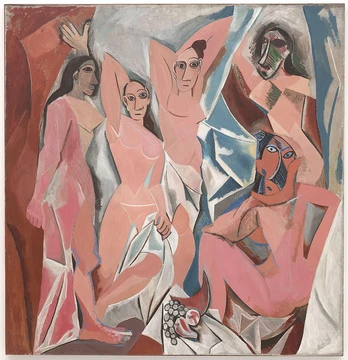
Its formal experiments ran parallel to Cubist painting, atonal and twelve-tone music, and the philosophical writings of Bergson and Husserl, all of which questioned fixed perspective and linear time. Joyce explicitly modeled Ulysses's structure on Homer's Odyssey, linking the avant-garde to classical myth.
Why do fans and scholars still study these writers today?
Their techniques—unreliable narration, temporal layering, free indirect discourse, open-ended ambiguity—remain the default toolkit for contemporary literary fiction and screenwriting. Reading them trains a reader to notice how narrative choices shape what a story feels like, not just what it says.